Royal Albert Hall event rubbish plans and collection
Posted on 20/05/2026
Royal Albert Hall Event Rubbish Plans and Collection: A Practical Guide for Smooth, Clean Events
Planning rubbish collection for an event at the Royal Albert Hall sounds simple at first. Then the details start arriving: guest numbers, catering waste, deliveries, time windows, venue rules, loading access, post-event clear-down, and the awkward question of who is actually collecting what, and when. If you are coordinating a concert, private hire, corporate reception, or a large production day, the rubbish plan can quickly become one of the make-or-break parts of the whole operation.
This guide on Royal Albert Hall event rubbish plans and collection breaks the process down in plain English. You will find out what a sensible waste plan looks like, how collection usually works, what to watch out for, and how to avoid the sort of last-minute scramble that nobody enjoys. Truth be told, clean-up logistics are often invisible when they go well. But when they go badly, everyone notices.
Whether you are an event organiser, venue contractor, production manager, caterer, or facilities lead, the aim is the same: keep the space clean, safe, efficient, and compliant without turning the end of the night into a headache. Let's walk through it properly.
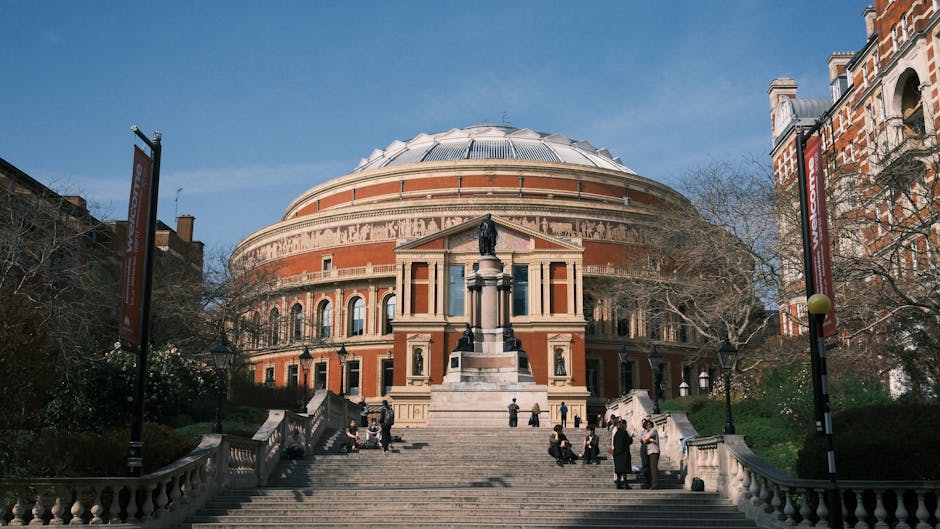
![A large, ornate stone monument with a multi-tiered, pointed spire featuring decorative carvings and statues, situated in a park on a paved area. Surrounding the monument is a low metal fence with a gold-colored finish, and the base of the structure includes detailed sculptures. Behind the monument, there are trees with green foliage and a historic brick building with a rounded roof and arched windows. The sky above is partly cloudy with patches of blue, and the scene is gently illuminated by natural daylight. In the background, a few people can be seen walking or standing at a distance. The setting appears to be a public outdoor space adjacent to a cultural or historic site, with the scene reflecting a calm, well-maintained environment suitable for outdoor gatherings or cultural events, which may generate waste requiring local or private rubbish collection, something that companies like [COMPANY_NAME] can support with alternative rubbish removal services.](/pub/blogphoto/royal-albert-hall-event-rubbish-plans-and-collection1.jpg)
Why Royal Albert Hall event rubbish plans and collection Matters
A strong rubbish plan is not just about keeping bins from overflowing. At a venue like the Royal Albert Hall, it affects guest experience, staff safety, movement through backstage and service areas, and how quickly the space can be handed back after the event. One missed collection can create a chain reaction: bags in the wrong place, blocked routes, extra labour, or waste left waiting until the next shift. Nobody wants that awkward moment at 11:45pm when the team are looking at a mountain of black sacks and asking, "Right... where does this all go?"
For event organisers, waste planning also matters because different event types produce very different rubbish streams. A drinks reception creates glass and mixed packaging. A catered dinner produces food waste, cardboard, and service waste. A production-heavy show may generate wooden offcuts, cable wrap, consumables, and backline packaging. If you do not plan for the type of waste you will actually produce, you end up managing chaos instead of a process.
There is also a reputational side. Guests rarely comment on how well rubbish was collected, but they absolutely notice sticky floors, visible waste piles, bad smells, or bins overflowing near entrances. In a heritage, high-profile venue, cleanliness is part of the overall standard. It quietly tells people that the event was organised properly.
If your event sits within a wider delivery or fit-out programme, it can help to think of waste planning alongside other operational services such as waste management in London and, where relevant, event cleaning services in London. Waste and cleaning are separate jobs, but in real life they overlap constantly.
How Royal Albert Hall event rubbish plans and collection Works
At a practical level, the process usually starts before event day. The team identifies what waste is likely to be produced, where it will be created, how it will be separated, who will move it, and where it will be stored before collection. That sounds tidy on paper. In reality, the plan has to work around access times, venue procedures, load-in and load-out windows, and the pace of the event itself.
For a venue as busy and structured as the Royal Albert Hall, a waste plan generally needs to fit into the event operations schedule. That may include:
- pre-event delivery waste removal
- front-of-house bin placement
- back-of-house waste segregation
- catering waste handling
- glass and recycling collection
- post-event sweep and clear-down
- scheduled uplift or same-night removal
The collection side is about timing and control. If waste is collected too early, you may interrupt the event or create a visual gap in service areas. Too late, and bags start stacking up in corridors or storage corners. The sweet spot depends on the size of the event and the operational rhythm. A lunchtime conference is one thing. A high-footfall evening show is another completely.
In many events, waste handling is split into streams. Mixed waste goes one way, dry recycling another, food waste another if the setup allows it, and glass is handled separately where required. Clear separation from the beginning usually makes collection smoother. If the bins are vague or poorly labelled, people toss everything into the nearest one. That is how recycling plans quietly fall apart. We've all seen it.
A sensible waste plan also includes contingency. If a pallet of packaging arrives unexpectedly, or catering produces more waste than forecast, someone should know the fallback plan. Extra sacks, a reserve holding area, and a clear escalation contact can save the evening.
Key Benefits and Practical Advantages
Good rubbish planning is one of those unglamorous things that makes everything else look better. The benefits are practical, immediate, and often bigger than people expect.
| Benefit | What it means in practice | Why it matters at Royal Albert Hall |
|---|---|---|
| Cleaner event spaces | Waste is removed before it builds up | Protects presentation standards and guest experience |
| Smoother operations | Teams know where waste goes and who handles it | Reduces confusion in a busy venue environment |
| Better compliance | Waste is handled in a way that aligns with expected duty of care | Helps organisers avoid avoidable problems |
| Less last-minute labour | Fewer emergency clear-ups and unexpected manual moves | Saves time during tight turnaround windows |
| Lower contamination risk | Recycling and general waste stay properly separated | Improves the quality of waste handling and reduces re-sorting |
There is also a subtle but real operational advantage: when rubbish collection is organised properly, other teams work better too. Catering can clear stations faster. Front-of-house stays neat. Production can strike equipment without navigating piles of packaging. Small thing, big difference.
And yes, it can also reduce stress. That alone is worth a lot on event day.
Who This Is For and When It Makes Sense
Royal Albert Hall event rubbish plans and collection matters for anyone responsible for keeping an event running smoothly from setup to final handover. That could be a venue team, an external event planner, a production company, a caterer, or a facilities contractor brought in for a one-off occasion.
It makes particular sense when the event has any of the following features:
- large guest numbers
- catering or bar service
- multiple waste types, such as glass, cardboard, and food waste
- tight turnaround times
- limited storage space for waste holding
- back-of-house movement through shared corridors
- production equipment, staging, or exhibition materials
If you are planning a small meeting with very light catering, the waste setup may be straightforward. But once you move into concerts, launches, seated dinners, or multi-day builds, the cost of not planning properly rises quickly. You do not want to discover on the night that there is nowhere to put wet glassware or that the only bag store is already full. Happens more often than people admit, to be fair.
For organisers who need support beyond waste collection, it is usually worth looking at broader event support such as contract cleaning services in London or a more complete commercial cleaning service. That way, the rubbish plan sits inside a proper operational framework rather than being treated as an afterthought.
Step-by-Step Guidance
If you need to build a workable waste plan for an event at the Royal Albert Hall, the simplest approach is to work backwards from the end of the event. What has to be cleared, by whom, and by what time?
1. Estimate the waste streams first
Start by identifying likely waste categories: general waste, recycling, cardboard, food waste, glass, and any special items created by the production. If a sponsor build is involved, add packaging waste. If catering is heavy, plan for more food and liquids than you think you will need. A rough estimate is fine at this stage, but it should be based on the actual event format, not a guess pulled from thin air.
2. Map the waste points
Think about where waste will be created. Bars, catering prep areas, loading docks, dressing rooms, press areas, cloakrooms, and foyer spaces all produce different rubbish in different volumes. A bin in the wrong place is almost as bad as no bin at all. People will not walk far to dispose of waste if they are busy.
3. Assign responsibility clearly
Someone must own the plan. Not "the team", not "operations", not "whoever is free". Name the person who checks bins, the person who approves collection timing, and the person who responds if waste builds up unexpectedly. It sounds basic. It is basic. Yet it is often the bit that gets fuzzy.
4. Build collection windows into the schedule
Collection should be tied to the event timetable. A pre-show clear-out might happen after load-in. A mid-event service collection may happen quietly during a natural pause. Final collection should align with strike and handover. If the venue requires a specific access window, build that in early so you are not negotiating it at midnight.
5. Decide how waste will be segregated
Set up the waste streams with practical signage and matching bags or containers. Recycled cardboard mixed into general waste is frustrating and costly to sort later. Separate streams only work if they are obvious and easy for staff to use under pressure.
6. Plan the holding area
Most events need somewhere for waste to wait safely before collection. This area should be out of guest sight, easy for staff to access, and clear of fire exits or busy walkways. In a venue environment, storage discipline matters more than people realise. Waste left in the wrong place can quickly become a space issue, not just a cleanliness issue.
7. Add a fallback plan
What happens if the bags fill faster than expected? What if the collection vehicle is delayed? What if the event over-runs? Build in a spare option. Even a simple backup contact or overflow arrangement can stop a small issue from becoming a messy one.
If you want a companion service to support the final stage of the job, a dedicated post-construction cleaning service can be useful for build-heavy events where dust, packaging and debris are part of the clean-up picture. Different job, similar mindset: clear it properly and leave the place ready for the next use.
Expert Tips for Better Results
A good plan is one thing. A good plan that works under pressure is another. A few small adjustments can make a big difference.
- Use simple labels. Staff are far more likely to follow clear words than colour systems that only half the team understands.
- Place bins where the waste is created. Not where it looks neat in a spreadsheet. Near bars, prep counters, and exits if appropriate.
- Check the first collection early. The first uplift tells you whether the system is actually working or just looking good on paper.
- Keep waste routes separate from guest routes. That protects presentation and reduces congestion.
- Brief everyone, not just supervisors. Temporary staff, caterers, security, and production runners all need the basics.
One practical trick: walk the route with a bin bag in your hand before the event starts. It sounds almost daft, but it shows you quickly where the bottlenecks are. If the route feels awkward to you with no time pressure, it will feel worse during the event.
Another small one. Put the backup bags somewhere obvious. More than once, teams have had spares "somewhere nearby" and spent ten minutes hunting for them. Not ideal when the kitchen is at capacity and the service door is already crowded.
If your event involves a lot of exterior set-down or site protection, it can also help to coordinate with services such as office cleaning in London for nearby operational spaces used by staff, especially when the event spillover affects changing rooms, admin areas, or temporary workspaces. The point is to keep the whole environment tidy, not just the main hall.
Common Mistakes to Avoid
Most rubbish-plan problems are not dramatic. They are small oversights that stack up. That is why they are so annoying.
Underestimating volume
A quiet-looking event can still produce a surprising amount of waste. Packaging, napkins, cups, broken down boxes, and food remnants add up fast. If you size the plan too tightly, the overflow will show itself at the worst possible time.
Mixing waste streams too early
Once recycling and general waste are mixed, the sorting burden increases. In a busy event, that usually means someone gives up and throws everything together. Not because they are careless, but because the process was too awkward.
Leaving collection too late
If you wait until the end to deal with all rubbish, you create a massive clear-down task. Staged collection is usually better. It keeps areas usable and makes final handover less painful.
Forgetting hidden waste zones
Dressing rooms, loading areas, temporary stores, and behind-bar spaces often generate waste that is easy to miss in planning meetings. Then someone opens the door and finds a little pile that has been growing quietly all evening. Sneaky, really.
Not matching the plan to the venue schedule
A plan can be excellent and still fail if it clashes with access controls, service routes, or the event run-of-show. Always check timing against the venue's actual operating constraints.
Skipping a named decision-maker
If nobody owns the plan, nobody fixes the plan. That is how a minor issue becomes a group discussion at 10:30pm.
Tools, Resources and Recommendations
You do not need a complicated system to run a good waste plan. In many cases, the best tools are the simplest ones.
- Waste mapping sheet: a basic checklist of waste types, locations, and collection times.
- Run-of-show document: useful for aligning rubbish removal with service breaks and strike.
- Bin labels and signage: keep them plain and unmistakable.
- Site plan or floor plan: mark waste points, holding areas, and collection routes.
- Staff briefing note: a short one-page summary can prevent endless repeat questions.
- Spare sacks and liners: always worth having more than you think you need.
When deciding on support, many organisers also look at broader services that help with the same event lifecycle. For example, if the event generates large volumes of mixed debris, end of tenancy cleaning in London may not be the direct match for an event, but the principles of systematic clear-out and handover are relevant. It is useful to think in terms of outcome: what needs to be left spotless, by what time, and who signs it off?
For ongoing venue support, a deeper service stack can be sensible. Some organisers prefer one contractor that can handle both routine and one-off needs, while others use separate specialists. There is no single perfect setup. The right choice depends on the scale of the event, the venue's expectations, and how much internal resource you have.
Law, Compliance, Standards, or Best Practice
Waste handling at events should always be approached carefully and sensibly. In the UK, organisers and contractors typically need to follow accepted duty-of-care expectations for waste, along with venue rules, local operational requirements, and standard safety practices. The exact responsibilities depend on the event, the site, and the waste being handled.
In plain English, that means you should know:
- what waste is being produced
- who is responsible for it at each stage
- how it is stored before collection
- how it is transferred without creating a hazard
- how records or handovers are managed where required
For food-related waste, contamination and hygiene are practical concerns as much as compliance concerns. For heavy or sharp waste, manual handling and injury prevention matter. For mixed operational waste, access and fire safety can become important if bags are stacked badly or block a route. These are all ordinary venue-management issues, but they need to be treated seriously.
Best practice usually includes clear segregation, safe storage, tidy routes, and a named person in charge. If any part of the process is uncertain, it is smarter to confirm it with the venue or your waste contractor before the event rather than after. That little bit of extra checking can save a lot of stress later.
If your event sits within a broader cleaning or facilities programme, it may also be worth aligning waste handling with a window cleaning service or other venue presentation work so the whole site feels polished. It is not strictly part of rubbish collection, of course, but at a venue of this standard the details all add up.
Options, Methods, or Comparison Table
There are a few common ways to manage event rubbish plans and collection. The best option depends on scale, timing, and how much support you need onsite.
| Method | Best for | Pros | Trade-offs |
|---|---|---|---|
| In-house event team handling waste | Smaller events or venues with experienced staff | Flexible, familiar, often quicker for simple setups | Can stretch staff if waste volumes rise unexpectedly |
| Dedicated event cleaning crew | Medium to large events with service pressure | Better coverage, clearer ownership, faster response | Requires briefing and coordination with the run-of-show |
| Hybrid setup with venue plus contractor | Complex events or multi-team builds | Shared workload, strong resilience, better contingencies | Needs careful communication to avoid overlap or gaps |
For most large venue events, the hybrid model works well because it gives you flexibility without losing accountability. The venue team knows the site. The contractor brings extra hands and structured collection routines. That combination, when managed properly, is usually very effective.
Still, there is no magic arrangement. A small private event can run perfectly with a simple in-house plan. A large, high-footfall show may need more formal support. The right method is the one that matches the reality on the ground, not the one that sounds impressive in a planning meeting.
Case Study or Real-World Example
Imagine a corporate evening event at the Royal Albert Hall with a reception, seated dining, and a short post-event networking period. The venue has multiple waste types: glass from the reception area, food waste from catering, cardboard from deliveries, and general waste from guest areas and back-of-house service points.
In this kind of setup, the team might divide the work into three stages. Before guest arrival, they remove packaging from deliveries and place clearly labelled bins at service points. During the event, they run one or two quiet collections from the back-of-house area so nothing piles up. After the event, they clear all remaining waste in a final sweep, checking dressing rooms, bars, and temporary storage spaces before handover.
The key success factor is not just having enough bins. It is having the right waste in the right place at the right time. One organiser who does this well will often say something simple like, "We didn't have to think about rubbish all evening." That is the real win. When waste disappears into the background, the event can breathe.
A less successful version of the same event usually fails because everyone assumes someone else is handling the overflow. Then a service corridor starts filling with bags, the catering team gets slowed down, and the final clear-down becomes rushed. Not a catastrophe, just a very annoying evening. And those are the details people remember.
Practical Checklist
Use this checklist to pressure-test your plan before event day. It is deliberately simple.
- Have you identified all likely waste streams?
- Are waste points placed where rubbish is actually generated?
- Has one person been named as the waste lead?
- Do staff know what goes in each bin?
- Are collection times aligned with the event schedule?
- Is there a clear holding area for full bags or containers?
- Do you have spare bags, liners, and labels?
- Have you checked access routes and vehicle timing where relevant?
- Is there a fallback plan if waste volumes are higher than expected?
- Have you checked post-event handover requirements?
Quick expert summary: the best waste plan is the one that is simple enough for every team member to follow and detailed enough to survive a busy event. Keep it practical, keep it visible, and keep it moving. That is usually the formula.
Conclusion
Royal Albert Hall event rubbish plans and collection may not be the headline part of an event, but it is one of the parts that quietly determines whether everything feels well run. A clear plan supports guest experience, protects staff movement, reduces stress, and makes final handover smoother. It also gives you a much better chance of handling waste properly the first time, rather than fixing it after the fact.
The strongest approach is simple: map the waste, assign responsibility, match collection to the event schedule, and build in a backup. Once that is in place, the whole thing becomes far less daunting. Not effortless, perhaps. But manageable. And in event work, manageable is a very good place to be.
Get a free quote today and see how much you can save.
When the last guest has gone and the lights are dimming, the best feeling is a space that is calm, tidy, and ready for whatever comes next. That quiet finish matters more than people think.
![A large, ornate stone monument with a multi-tiered, pointed spire featuring decorative carvings and statues, situated in a park on a paved area. Surrounding the monument is a low metal fence with a gold-colored finish, and the base of the structure includes detailed sculptures. Behind the monument, there are trees with green foliage and a historic brick building with a rounded roof and arched windows. The sky above is partly cloudy with patches of blue, and the scene is gently illuminated by natural daylight. In the background, a few people can be seen walking or standing at a distance. The setting appears to be a public outdoor space adjacent to a cultural or historic site, with the scene reflecting a calm, well-maintained environment suitable for outdoor gatherings or cultural events, which may generate waste requiring local or private rubbish collection, something that companies like [COMPANY_NAME] can support with alternative rubbish removal services.](/pub/blogphoto/royal-albert-hall-event-rubbish-plans-and-collection3.jpg)